
Sensation Play, Ticklers & Teasers: A Complete Safety Guide for Beginners
Most intimacy education stops at anatomy and protection. Almost nothing prepares adults for the quieter, more nuanced side of physical connection — the deliberate use of light touch, texture, temperature and anticipation to heighten awareness. That discipline is called sensation play, and tools such as feather ticklers, silk scrims and soft-bristle teasers are its gentlest entry point. This sensation play, ticklers & teasers safety guide is written as an educational deep-dive, not a shopping list. Its purpose is to help you understand why light touch affects the nervous system, how to choose body-safe materials, how to communicate clearly with a partner, and how to keep hygiene and consent at the center of everything. Used thoughtfully, these tools are less about excitement and more about attention — a structured way to slow down and notice.
Understanding Your Needs
Sensation play works because of how human skin actually processes touch. Light, moving contact across the forearm, shoulder or neck is detected by specialized nerve fibers that respond far more strongly to slow, unpredictable stimuli than to firm, steady pressure. This is why a feather can feel electric and why a warm compress followed by a cool one produces a noticeable shift in alertness. Neurologically, you are engaging the body’s light-touch and affective-touch pathways, the same systems involved in comfort regulation and stress reduction.
Understanding your own needs before buying anything means answering a few honest questions:
- What are you actually seeking? Calm and mindfulness, novelty within a long-term partnership, reawakening sensation after a period of low libido, or rebuilding confidence after surgery, childbirth or a medical treatment that changed bodily sensation.
- What is your sensitivity baseline? Some people are genuinely hypersensitive to light touch and find it irritating rather than pleasant. This is a real neurological difference, not a mood.
- What are your boundaries? Sensation play overlaps with power dynamics for some couples and stays purely sensory for others. Both are legitimate; knowing which you want prevents confusion mid-experience.
- What does your partner need from you? A clear signal system, agreed duration, and the ability to stop without social cost.
Health professionals increasingly recognize sensory-based intimacy as a useful tool for people whose desire is responsive rather than spontaneous — desire that appears once the body is already comfortable and engaged, rather than arriving as sudden urge. Ticklers and teasers suit this pattern because they build gradually and require no performance.
Real Users, Real Stories
“Rebecca,” 34, agreed to share her experience on condition of anonymity because the topic still feels embarrassing to raise with friends. She and her husband had been together eleven years, and after a period of chronic work stress, physical intimacy had become, in her words, “efficient and forgettable.” A therapist she respected suggested they try something non-goal-oriented: ten minutes a week using only a soft texture, with no expectation of anything following it.
Her first purchase was a single feather tickler, ordered discreetly through XNXXMALL because the packaging description clearly stated plain outer shipping and no product name on the label. That detail mattered more than the product itself — she said the fear of a neighbor guessing what was inside nearly stopped her from ordering.
Two things surprised her. First, the tickler felt unpleasant on her skin for roughly the first minute. She had assumed discomfort meant she was doing something wrong, when in fact light touch often registers as odd or itchy until the nervous system habituates. Second, once it settled, the experience shifted something emotionally rather than physically. “We talked for the first time in months about what we actually notice in each other.” She and her husband added a silk scarf and a temperature step later, over several weeks, never more than one new element at a time. Her advice to other first-time buyers is unglamorous and excellent: buy one simple tool, read the care instructions before the first use, and give the sensation thirty seconds before judging it.
Myth vs Fact
Two misconceptions block more beginners than any practical obstacle.
Myth 1: Sensation play is inherently intense, and it is a gateway to more extreme practices.
Fact: Ticklers, feathers and silk sit at the lowest end of the sensory spectrum. They involve no restriction, no impact and no pressure, which is exactly why occupational and sex therapists sometimes use textured touch as a starting point for people rebuilding comfort with their own bodies. Nothing about the practice obliges you to escalate. A couple may use a feather for years and never progress further, and that is a complete practice, not an unfinished one.
Myth 2: If it feels strange, tingly or briefly irritating, something is wrong or you are not compatible with your partner.
Fact: Light touch frequently triggers a startle or itch response for the first several seconds to a minute. Unpredictable, barely-there contact is processed as ambiguous by the brain until context confirms safety. Brief oddness is expected neurological habituation, not a compatibility verdict. Similarly, a physiological reaction — goosebumps, involuntary muscle twitching, sudden laughter — is a reflex, not automatically a signal of pleasure. This is precisely why couples benefit from agreeing on a verbal check-in rather than reading reflexes as feedback.
A Typical First-Time Conversation
The logistics conversation is the skill most beginners lack. A workable version looks like this:
> Alex: I want to try something low-key. A feather, maybe ten minutes, and we can stop whenever.
> Jamie: Okay. What are you hoping happens?
> Alex: Honestly, I want us to slow down. I don’t want it to lead anywhere unless you want it to.
> Jamie: Good. Can we keep talking? I laugh when things tickle, and it might look like I’m not into it.
> Alex: Noted. Laughing is fine, not a signal. Let’s use a number — three is great, one is slow down, zero is stop, no questions asked.
> Jamie: Deal. And I’d rather we don’t try anything new the same evening. One thing at a time.
> Alex: Agreed. I’ll wash my hands, you check the feather is clean, we start at twenty minutes before bed so we’re not rushing.
That exchange accomplishes five things: defines scope, removes performance pressure, decodes an ambiguous reflex, installs a rating scale and protects against novelty-stacking. Any beginner can reuse it almost verbatim.
How to Choose
Recommended Products

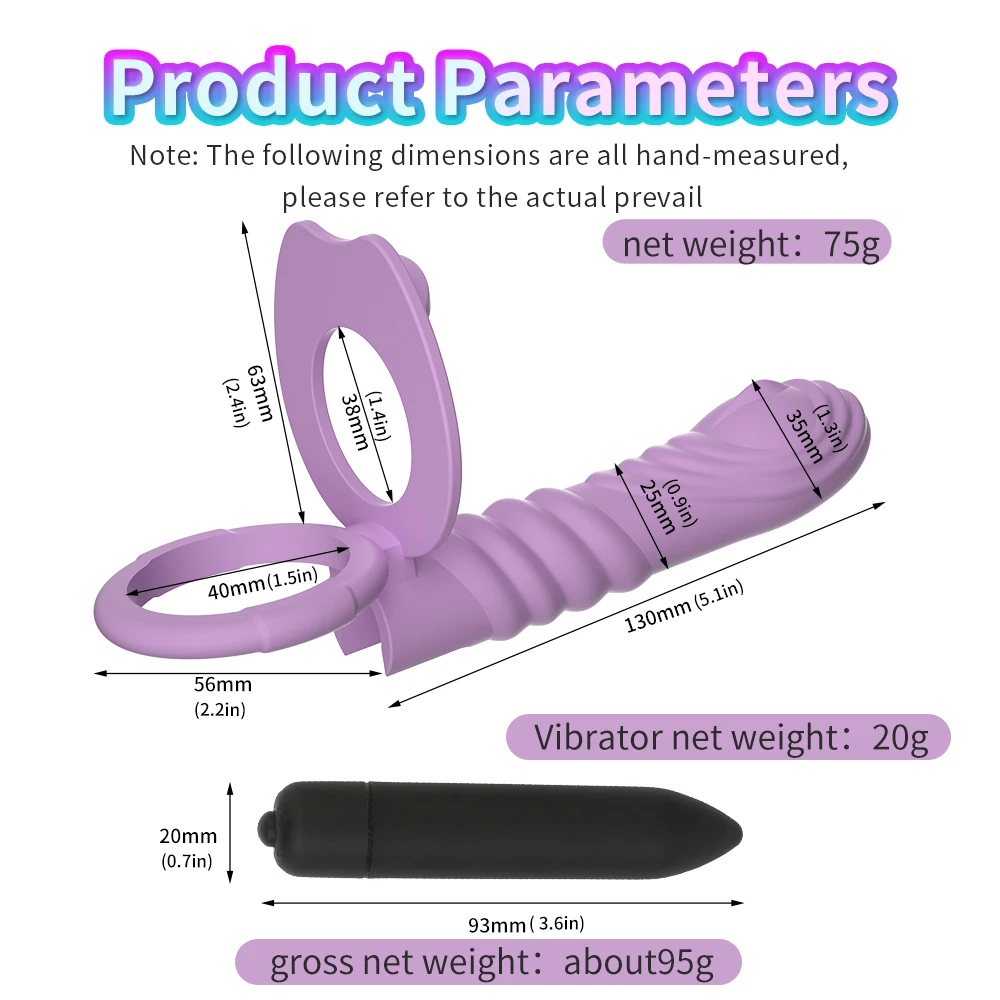

Recommended Products


Choose by material, texture strength and cleanability, in that order.
1. Handle and shaft. A comfortable, non-porous handle wipes clean properly; a bare wooden dowel that has been soaked or left humid can harbor mold in the grain. Look for sealed or coated handles.
2. Contact material. Real feathers are delicate, pleasant and difficult to sanitize — better as a low-frequency treat. Silicone-based and smooth synthetic fibers are non-porous and washable, which makes them the sound default for regular use.
3. Texture intensity. Start softer than your instinct suggests. Fine goose-down-style plumes are forgiving; stiff bristle brushes and coarse ropes are not beginner tools even when marketed as gentle.
4. Weight and reach. A longer handle changes who can use it comfortably and how much control the person holding it has. Very light tools are harder to control precisely than slightly weighted ones.
5. Washability claim. If the retailer does not state whether the item can be washed, assume it cannot, and decide whether that is acceptable. Reputable listings, including those at XNXXMALL, state material composition — use it.
6. Discreet shipping and returns policy. Practical realities of buying adult wellness items, and worth confirming before checkout rather than after.
Safety & Care
This is the section most guides shorten, and it is the section that matters clinically.
Always use a water-based lubricant with silicone products, clean before and after with mild soap and warm water, store in a breathable pouch, and respect age verification and local regulations.
Expand that into a routine:
- Before first use, and before every use. Wash the tool. Silicone and smooth synthetics tolerate mild soap and warm water; rinse thoroughly because residue irritates skin. Dry completely before storing — trapped moisture degrades adhesives and encourages microbial growth.
- With silicone items specifically. Oil-based and silicone-based lubricants break down the surface, creating microscopic roughness that cannot be cleaned. Water-based only.
- Skin checks. Light touch can abrade delicate skin, especially on the face, neck or on skin thinned by medication, menopause or corticosteroid use. Avoid broken skin, rashes, moles that have changed, and any area recently treated medically.
- Circulation and sensation cautions. Anything that wraps around a limb or torso, however loosely, must never restrict breathing or circulation, must never be used on someone who is intoxicated, and must be removable by the person wearing it or within seconds. Numbness, tingling beyond the intended sensation, coolness or color change means remove immediately.
- Temperature play. Test any warm or cool item against your own inner wrist before applying it to a partner. Never use ice directly on skin for more than a moment, and never heat anything beyond comfortably warm.
- Hygiene sharing. Non-porous items used with more than one person need cleaning between users, and barrier use or dedicated items is cleaner practice than improvising.
- Storage. A breathable pouch keeps dust off while preventing moisture buildup. Avoid sealed plastic bags for long-term storage, and keep items away from direct sunlight, which degrades most polymers and bleaches feathers.
- Legal and store obligations. Age verification exists for a reason and applies equally to sensory items. Comply with your local regulations and with the retailer’s terms.
- Stop rule, in writing. Agree that “zero” or “stop” ends the activity immediately, without persuasion, debrief or renegotiation in the moment.
Top Recommendations
Rather than ranking products, this is a starter set that progresses logically.
- A fine feather tickler — the canonical introduction to light, moving touch. Choose washable synthetic fibers for regular use.
- A small silk or microfibre scrim — broader, softer, more forgiving contact. Excellent for people who find feather points irritating.
- A soft-bristle silicone brush — slightly more defined texture, fully cleanable, useful for back and shoulder work.
- Two temperature-safe items — a smooth stone or silicone roller, cooled or warmed, never extreme.
- A water-based lubricant — small bottle, matched to your tool materials.
- A breathable storage pouch and a dedicated cleaning cloth — the two items that determine whether your tools stay hygienic for months.
Four tools plus lubricant and care supplies is more than enough to explore the entire light-touch range. Buying six ticklers on day one is a common and wasteful mistake.
Expert Tips
1. Habituate before judging. Give any new texture thirty seconds on one area before deciding it works.
2. Announce nothing. Predictable touch blunts sensation. Unannounced, erratic, slow contact is what the nervous system amplifies. Vary rhythm and direction rather than speed.
3. Use the “less is more” rule. One tool, one body region, one session. Stacking novelties in a single evening makes feedback meaningless.
4. Separate the reflex from the report. Goosebumps, twitching and laughter are involuntary. Ask; do not interpret.
5. Bookend the conversation. A two-minute check-in before and after — what registered, what didn’t, what to repeat — produces more improvement than any purchase.
6. Treat aftercare as hygiene-adjacent. Wash the tool immediately after use, while residue is still loose. Later is much harder.
7. Watch the shoulders and jaw. People tense involuntarily during unexpected light touch. A relaxed-shoulder reminder is more useful than a technique change.
8. Log sensitivity changes. New persistent itch, numbness, or pain with light touch warrants a medical conversation, not a different product. Some medications and neurological conditions alter sensory processing.
Common Myths
Beyond the two corrected above, several other beliefs quietly discourage beginners. The idea that sensation play is only for people with high libidos or “adventurous” personalities inverts reality — it is often most valuable for people whose desire is responsive, or whose body feels unfamiliar after illness, childbirth or menopause. The claim that store-bought tools are unnecessary because “hands are enough” misses the point: a texture that the recipient cannot predict or replicate with their own hand is the active ingredient, not a gimmick. The belief that needing a signal system means the relationship lacks intuition is simply wrong; structured communication is what clinicians recommend precisely because intuition reliably misreads involuntary reflexes. Finally, the notion that these items degrade, discolor or smell “off” over time but remain safe is a hygiene error worth taking seriously — a sticky, cloudy, cracked or musty tool has reached the end of its serviceable life and should be replaced, not cleaned harder.
More Options on XNXXMALL



Frequently Asked Questions
: Is this sensation play, ticklers & teasers safety guide relevant if I only want to use a feather and nothing else?
Yes, entirely. The hygiene, communication and material-compatibility advice applies in full at the simplest level, and a single washable feather is a complete practice rather than a preliminary one.
: Why does light touch itch or feel strange at first, and does that mean it is wrong for me?
Ambiguous, unpredictable tactile input is initially flagged rather than enjoyed, then habituates. Give one area about thirty seconds on several separate occasions before concluding anything. Persistent pain rather than transient oddness is a different matter, and worth mentioning to a clinician.
: How do I clean a silicone tickler, and can I use any lubricant with it?
Mild soap and warm water before and after each use, rinse completely, dry fully, then store in a breathable pouch. Use only a water-based lubricant with silicone products; oil or silicone formulations damage the surface so it can no longer be properly cleaned.
: My partner laughs when something tickles. Does that mean they want to stop?
Laughter is an involuntary reflex in this context and carries no reliable meaning. This is exactly why a verbal scale — three, one, zero — is agreed on in advance rather than inferred in the moment. Ask, do not assume.
: Where does this sit within the wider ticklers & teasers safety guide conversation about consent and health?
At its center. Sensation play is low-risk physically and moderate-risk socially: it requires explicit agreement, an unambiguous stop signal, sobriety on both sides, attention to skin and circulation, and honest hygiene maintenance. Age verification and local regulations apply, as does the practical advice from reputable health sources on communication and bodily autonomy.
Final Thoughts
Sensation play deserves better than being presented as a novelty, and better than being quietly folded into more intense categories. Understood properly, it is a disciplined practice of attention: knowing how light touch reaches the nervous system, choosing washable materials, maintaining real hygiene, agreeing on language before you begin, and stopping when someone says stop. That is the whole of it, and it is enough.
If you are assembling a first set, start with one feather, one silk scrim, a water-based lubricant and a breathable pouch, and give the simplest thing a fair trial across a week rather than a single evening. For body-safe materials, honest product information and genuinely discreet delivery, XNXXMALL is the retailer we trust for exactly that kind of careful start. For broader, non-commercial guidance on intimacy, communication and sexual wellbeing, the [Mayo Clinic’s sexual-health resources](https://www.mayoclinic.org/healthy-lifestyle/sexual-health) are an excellent place to continue.
 No products in the cart.