
When to Stop Using a Large Dildo If It Hurts: A Shopping & Safety Decision Guide
If you are researching large dildos and have landed here, you are not just scrolling for specs — you are trying to make a safe, confident purchase decision. The question “when to stop using a large dildo if it hurts” sits at the intersection of product choice, body awareness, and basic health literacy. This guide treats you like the informed buyer you are: someone who wants to understand materials, sizing, and comfort thresholds before money leaves your account, and who respects the body’s signals as honest data, not obstacles.
You fit this article if you are evaluating a first large-size insertable, upgrading from smaller options, or simply want a clear framework for recognizing the difference between normal adjustment pressure and a signal that says stop, reassess, or change your product choice.
What Makes a Good One: 5 Buying Factors
Before any size discussion, five criteria determine whether a large dildo will feel supportive versus uncomfortable:
1. Taper and base geometry. A large girth product that still tapers toward the tip reduces initial resistance and gives your body a gradual adaptation path. A flat, blunt end at full diameter creates immediate peak pressure.
2. Weight distribution. Heavier products (glass, metal) press differently than lighter ones (silicone, TPE). If you have limited pelvic-floor strength, a 280-gram silicone piece is far easier to manage than a 600-gram metal one at the same diameter.
3. Firmness grade. Within silicone, the durometer range matters. A 40A-shore piece flexes enough to relieve point pressure; a 70A piece is rigid and demands more gradual stretching. Knowing your own comfort band prevents the “too firm for my body right now” mistake.
4. Suction base vs. open-end vs. flared base. A wide flared base distributes pressure across the perineal area and is critical for anal safety. For vaginal use, a modestly flared or rounded base prevents full insertion of a large piece. Match the base to your intended use.
5. Seam integrity and porosity. Non-porous materials (glass, medical silicone, metal) can be sterilized. Porous materials (TPE, jelly rubber) trap bacteria in micro-channels even after washing. For a product you will use repeatedly, non-porous is the safer default.
Materials & Build Compared
| Material | Pros | Cons | Best For |
|—|—|—|—|
| Medical-grade silicone | Non-porous, hypoallergenic, wide firmness range, easy to clean | Higher price; can absorb body heat quickly | Most users; sensitive bodies |
| Tempered glass / borosilicate | Rigid, temperature-play capable, fully sterilizable | No flex; heavier; must be undamaged | Experienced users wanting firm pressure |
| Stainless steel | Extremely durable, temperature-responsive | Very heavy; no flex; learning-curve risky | Advanced, well-stretched users only |
| TPE / soft rubber | Inexpensive, very soft, flexible | Porous; degrades faster; harder to fully sanitize | Budget-friendly trial; disposable-minded users |
| ABS plastic (with coating) | Firm, lightweight, low cost | Coating can chip; less body-temperature conduction | Beginners wanting rigid feel at low cost |
The honest trade-off: silicone gives you the best balance of safety, comfort, and longevity. Glass and metal reward experienced users who already know their size ceiling. TPE is a fine entry point but needs replacement more often.
Real Users, Real Stories
Anonymous case – first-time large-size buyer, 34, using a product for solo wellness:
“I ordered a 3.5-inch girth silicone piece after months of stretching with smaller items. The first two sessions I kept hitting a wall where the perineal pressure made me stop. I was embarrassed and thought I should ‘push through.’ Then I read XNXXMALL’s sizing guide, realized I had skipped the intermediate 3-inch step, and swapped to that size for two weeks. The jump to 3.5 inches afterward felt like a natural continuation instead of a fight. The rule that saved me: if pain is sharp, shooting, or persists more than ten minutes after stopping, you stop. Soreness that fades within an hour is normal adaptation. Sharp, localized, or radiating pain is not.”
Myth vs Fact
Myth 1: “The bigger, the better, and discomfort means I’m doing it right.”
Fact. Discomfort that signals progress is a mild, warm, stretching sensation that fades within minutes of resting. Pain — sharp, pinching, or radiating into the abdomen, perineum, or lower back — is your tissue telling you the diameter, firmness, or insertion depth exceeds what the muscle and connective tissue can accommodate today. Stopping and returning next session is not failure; it is the correct protocol. There is no health benefit to enduring pain, and forceful progression risks micro-tears that lengthen recovery far beyond the time you saved.
Myth 2: “I don’t need lube if I’m well-stretched.”
Fact. Mucous membranes are not designed for dry friction against a 3+ inch diameter object, no matter how adapted the tissue is. A quality water-based lubricant reduces shear force, protects the epithelium, and makes the “stop-or-continue” judgment far clearer: you should feel glide, not drag. If you must push through resistance that lube did not eliminate, the size or firmness is still mismatched for this session.
A Typical First-Time Conversation
Between a partner and a first-time large-size user:
Partner: “So you got the new size?”
User: “Yeah, the 3.25-inch one. I was nervous about the step up.”
Partner: “How’d the first try go?”
User: “Honestly, the first two inches felt fine, then I hit a point where it was just… a lot. Not a bad lot, but I felt pressure building behind my pelvic floor. I stopped, rested for maybe ten minutes, and went back. Second round it was smoother.”
Partner: “And the pain question — did it hurt?”
User: “No, not really. Just a fullness ache, like after a long workout. If it had been sharp or if it had still been tight after the rest, I would have stopped for the night. I’ve been reading that the rule is: if you can’t breathe easily or the ache turns into a pinching pain, you back off. No ego, just data.”
Partner: “That’s a healthy way to think about it.”
User: “Totally. And I left the flared base sitting outside the whole time, just like the XNXXMALL safety card said.”
How to Choose
Recommended Products
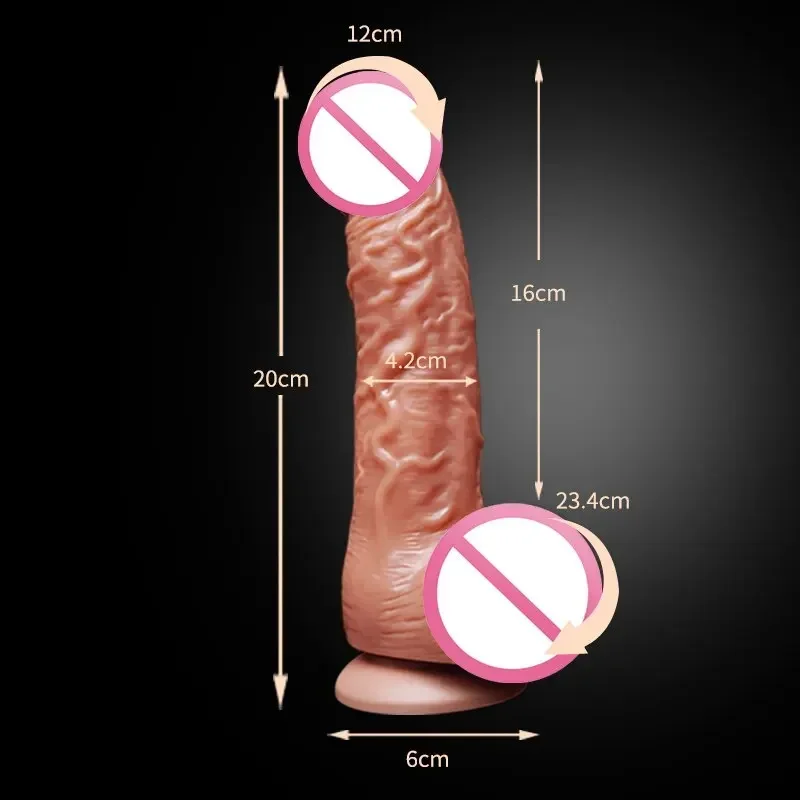


Recommended Products


Walk through these steps in order:
- Measure your comfort ceiling. If you currently use a 2.5-inch piece comfortably, a 3-inch next step is conservative; 3.25–3.5 inch is moderate; 3.75 inch+ is aggressive. One half-inch jumps are the standard progression interval.
- Pick the material that matches your budget and replacement cycle. Silicone (40–50A shore) is the all-rounder. If budget is tight, a good TPE piece is acceptable for 3–6 months of use with strict cleaning.
- Decide on weight. Start under 350 g unless you already handle heavier items.
- Check the base. Flared or disk base for anal use; rounded, moderate profile for vaginal use.
- Read the retailer’s return/comfort window. XNXXMALL lists a 30-day comfort-replacement policy on body-safe items, which removes the “I hope this size works” gamble.
Safety & Care
- Always use a water-based lubricant with silicone products; silicone-based lubes can break down the polymer matrix over time.
- Clean before and after every session with mild, fragrance-free soap and warm water. Let air-dry completely before storage.
- Store in a breathable cotton or mesh pouch — not a sealed plastic bag, which traps moisture and encourages microbial growth.
- Inspect the surface each time: any tackiness, discoloration, or micro-crack means the material has degraded; retire it.
- Respect age verification at checkout and comply with local regulations regarding adult-product purchase and possession.
Top Recommendations
| Tier | Pick | Why |
|—|—|—|
| First large (3.0–3.25 in) | XNXXMALL Soft-Sil series, 45A, flared base | Gentle slope, forgiving firmness, easy to clean |
| Intermediate (3.3–3.5 in) | XNXXMALL Classic Silicone, 55A, medium weight (~280 g) | Balanced firmness for users past the initial jump |
| Advanced (3.6–4.0 in) | Borosilicate glass, tapered, 400 g | Rigid, temperature-play, for well-stretched experienced users |
| Budget trial | XNXXMALL TPE Starter, 3.0 in, < $20 | Low-cost way to test comfort before investing in silicone |
Worth It or Not? (Honest Verdict by Budget)
- Under $20 (TPE/ABS): Fine for a one- or two-month trial. You will replace it, and you cannot sterilize it. If you only plan to use the item a handful of times, the cost works out.
- $25–$55 (quality silicone): The sweet spot. You get a non-porous, hypoallergenic piece that lasts 2+ years with basic care. For most readers, this is the only tier worth spending on for a recurring-use item.
- $60–$120 (premium silicone / glass / steel): Justified if you already know your size, want temperature play, or are moving to 3.75+ inch and need the rigidity and weight of metal/glass. Not justified for a first large purchase.
If your answer to “will I use this weekly?” is maybe, stay in the $25–$55 range. You are buying a wellness tool, not a performance requirement.
More Options on XNXXMALL


Frequently Asked Questions
: When to stop using a large dildo if it hurts — is a 10-minute soreness window the real cutoff?
A. Use pain quality, not just duration. Sharp, pinching, or radiating pain means stop immediately. A warm, fullness ache that fades within roughly ten minutes of resting is within normal adaptation range. If the ache remains sharp after rest, the size or firmness is still above your current comfort ceiling; back off one step.
: Can I just “push through” the pain of a large dildo if I want faster progress?
A. No. Tissue micro-tears from forced progression add 5–10 days of recovery time and can create scar tissue that makes the next size harder to accommodate. Gradual, pain-free steps actually produce faster long-term adaptation than push-through sessions.
: When should I stop using a large dildo if it hurts and see a healthcare provider?
A. Seek professional guidance if pain persists beyond 48 hours, if you notice unexplained bleeding, a lump, or a loss of sensation, or if pelvic-floor exercises feel worse rather than better. A gynecologist or urologist can rule out underlying issues before you resume.
: Is it safe to use a large dildo every day for stretching or comfort purposes?
A. Daily use is acceptable only with a well-lubricated, body-safe material and adequate rest between sessions (allow tissue 12+ hours). If you notice the “stop signal” — sharp pain, swelling, or prolonged soreness — insert a rest day. Consistency beats frequency.
: How do I know if the size I picked is actually too large for my body right now?
A. The simplest test: if you cannot comfortably hold the position for three slow breaths without clenching or guarding, the diameter exceeds today’s capacity. Downsize by half an inch, retest, and build back up over two to three sessions. XNXXMALL’s product pages list girth in centimeters so you can match to your current comfort range directly.
Final Thoughts
Buying a large insertable is a small, sensible decision when you frame it the way you would any wellness purchase: match the tool to your current body, not to an idealized “end goal.” The question when to stop using a large dildo if it hurts answers itself the moment you listen — the body gives clear, consistent signals, and the smart buyer’s job is simply not to override them.
You can compare sizes, materials, and base styles side by side in XNXXMALL’s large-dildo collection, where every body-safe listing includes girth in cm, firmness grade, weight, and a clear “recommended for” note so you are not guessing. And for broader, evidence-based context on pelvic health and safe sexual wellness, the Mayo Clinic maintains a trusted resource at [https://www.mayoclinic.org/healthy-lifestyle/sexual-health](https://www.mayoclinic.org/healthy-lifestyle/sexual-health).
Take your time, respect the stop signal, and the right size will feel less like a challenge and more like a comfortable fit.
 No products in the cart.